I WALK WITH YOU
on your path through unknown spaces.
Coaching and emotional counseling in Madrid
Do you see yourself here?
Sometimes, a voice inside us wakes up and begins to ask: what did I come here to do?
Facing that question can stir up our emotional and spiritual life, placing us right in front of an abyss.
And at the same time, if we give it space and work with it, that question can become one of life’s greatest blessings—offering the chance to readjust our decisions and live more aligned with our life purpose.
Below are examples of people and situations. Their names are not real, but their stories are.
Do their stories resonate with you?
Cristina
Cristina is 38 years old and, from the outside, her life seems well put together. She's an engineer, leads a team, and has built a stability that for a long time was her goal.
And yet, for some time now, she gets this strange feeling inside…
She has been working for years at a multinational insurance company and is responsible for a team of 15 people who trust her and feel comfortable under her leadership.
She has a good salary, a partner who loves her, a comfortable home, and a beautiful car. She has built a life that is coherent with what she once wished for herself. When she looks back on her path, she can recognize herself as someone who has come far.
And still, there are moments—sometimes at the end of a good day, other times in spaces of silence—when a quiet, hard-to-explain restlessness appears. As if something essential were asking to be heard.
That feeling scares her and, at the same time, draws her in. She senses there is truth there. Cristina would love to be able to pause, to give herself some space, and to look at herself honestly, letting the question slowly take shape:
“What does my life want to unfold now?”
Gonzalo
Gonzalo has about ten years left before retirement. His job no longer demands much of him and, for the first time in a long while, he has had space to look inward. On that journey, a question is starting to gain weight…
A civil servant at the Ministry of Education, Gonzalo is good at what he does, and years of experience allow him to work with very little effort.
For some time now, he has been on a path of self-exploration that first led him to therapy and later to training in Art Therapy—a path that is reconnecting him with parts of himself that had long been set aside.
For the past couple of months, one question has been accompanying him insistently:
“Do I really want to spend these ten years doing the same thing?”
He feels it is very important for him to answer this question, yet at the same time he does not dare to share it with many people around him. He worries about being judged, or about others becoming overly enthusiastic—opinions that might push him in one direction or another. How to approach such an important decision?
Mar
Mar is 20 years old and, until recently, felt that her path was fairly clear. Study for a degree, finish it, move forward. But something unexpected has disrupted that plan, and now she finds herself at a crossroads she never imagined…
Law seemed like a reasonable option, and also a choice strongly influenced by her parents’ desire for her to have a secure future.
At university, almost without looking for it, she tried theater. Something lit up!. On stage, a way of being present and alive appeared—something she had never experienced before.
Since then, continuing with her degree no longer feels the same, but leaving it is not easy either. Financial fears arise, along with difficult conversations and the vertigo of saying out loud: I want to be an actress. There is also the fear of making a mistake, of disappointing others, of not living up to what she dreams of.
Mar feels that there are no clear maps for this moment.
How to dare to truly listen to what is happening within her?
Jane
Jane is 30 years old and has just accepted an opportunity that changes everything. A promotion, a new country, a role with greater responsibility. On paper, it is a big step forward. In practice, nothing around her feels familiar…
She was born in London and works in the field of renewable energy, at a mid-sized company that is growing quickly and opening markets across different European countries.
Not long ago, she was offered the chance to relocate to Italy to lead the local team. She would become one of the youngest executives and one of the company’s first expats.
She enjoys traveling, working with people, and deeply believes in the impact of what she does. She wants to rise to the challenge. There is excitement and a strong desire to do well.
At the same time, the language, cultural codes, the city, and the team demand constant effort. She struggles to belong and to find her bearings. Jane wonders how to sustain herself through this moment. How to inhabit this new space without losing herself along the way?
If you’re in a similar moment, you don’t have to face those unknown spaces alone.
I can walk with you as you clarify that inner voice, turn it into a direction, and move forward with confidence.
And if it’s not your case but you’re curious anyway, reach out—we’ll explore it together.
Hi! I'm Abtin
I’ll tell you about me, the path that brought me here, and what keeps me moving forward…
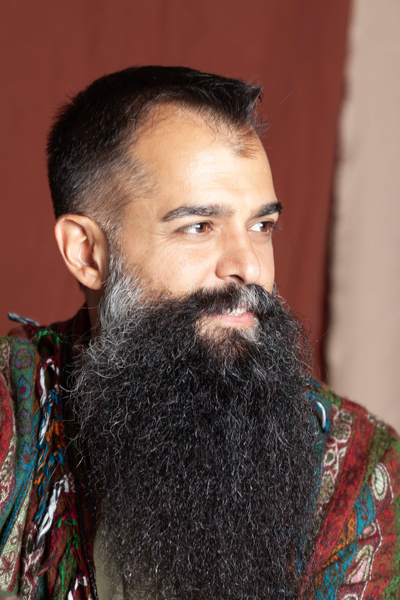
My name is Abtin Shamsaifar Kohansal. I was born in Tehran in 1983 and moved to Spain as a teenager. From very early on, life put me in contact with change, demands, and intense emotions—something that, in hindsight, has profoundly shaped my path.
For many years I followed a professional career centered on the tech and Cyber Security world. I worked in startups, consulting, and large corporations, eventually reaching senior international leadership roles. From the outside, everything seemed to fit: success, stability, and recognition. However, in 2017 a simple but deep conversation opened a crack that led me to ask whether that was really the road my soul wanted to travel.
That “awakening” began a search that led me to coaching, humanistic therapy, and Gestalt therapy. I became certified as a coach in 2018, deepened my self-knowledge through the SAT Program, and in 2023 I left the corporate world to dedicate myself fully to accompanying others through their journeys. Today I study Psychology purely for the joy of learning and I train professionally in acting.
This text is only a brief summary. If you want to know my journey and the process that brought me here in more detail, you’ll find the full version further down.
Training
In my “other life”
- Technical Engineering in Computer Science at Universidad Carlos III, Madrid
- Several professional certifications in the field of Cyber Security
In my “new life”:
- Certified Professional Coach (CPC), by iPEC
- Energy Leadership® Index Master Practitioner (ELI-MP), by iPEC
- Gestalt Therapy Training at Equipo Centro(finishes June 2026)
- Programa SAT, offered by the Claudio Naranjo Foundation (Level I)
- Enneagram of Personality Workshop, by Antonio Catalán, Equipo Centro
- BA in Psychology at UOC (studying for personal enjoyment)
-
Actoral Training
- Initiation in Theater, Cuarta Pared(2017)
- "Permanent Theater Workshop", Cuarta Pared (2018-2023)
- Actor Training Course, Estudio Corazza(since 2024. Currently Level II)
- Various seminars and workshops in acting (Óscar Velado), voice (Nuria Castaño), and movement (Andrea Mizes)
Languages
- I speak Farsi, English, and Spanish as native languages
- I have a functional level of Italian and basic comprehension of French
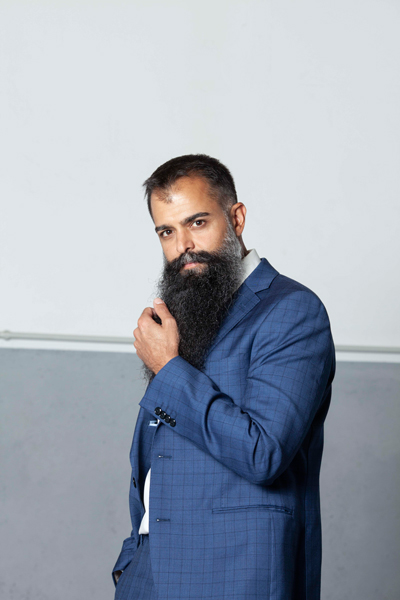
My name is Abtin Shamsaifar Kohansal. I was born in Tehran (Iran) in the winter of 1983, four years after the Revolution shook the country, and two years after the start of the Iran–Iraq war that would last eight years. It seems I’ve been drawn to intense emotions from the very beginning!
I was the only child of a middle-class family facing growing difficulties, like so many others affected by the country’s situation. My mother was a nurse, and my father was what today would be called an entrepreneur.
My childhood wasn’t easy, but my parents made sure I could enjoy many privileges. I had a good education, many friends, and a large extended family.
During those years I was always an exemplary student and son, getting top grades and doing lots of extracurricular activities.
My parents divorced when I was 15.
At 17, together with my father, I moved to Spain with the idea of finishing high school there and then going to the United States for college (my father had lived and studied there for many years). However, life had other plans: he had to return to Iran, and I stayed alone in Spain at 18. My friends called my apartment “The Temple”… I think that alone describes what those years represented!
When it came time to choose a degree, I considered only two options: Psychology or Computer Science. I loved both.
I ended up choosing the latter without really knowing why (years later I realized I was following the path my father expected of me: a “good” degree; a “good” job; a “good” life).
I taught myself Cyber Security—before that word even existed! (I even participated as an author in three books on the subject…), started working in startups and small companies where I learned a lot—so much so that they began to feel too small.
I moved into top-tier consulting—the so-called “Big Four,” in this case PwC—and shortly after I was hired by MAPFRE (a Spanish multinational insurance company headquartered in Madrid).
I had a meteoric career, always looking for the next step, always looking to advance as fast as possible within a fairly rigid structure. I held several positions and responsibilities.
When I decided to leave, I had spent three years working as Chief Security Officer (the company’s top security executive) for three group subsidiaries in Italy. I lived between Madrid and Milan, had an excellent salary, a comfortable life, pride in everything I’d achieved and my father’s approval… yet I didn’t realize that along the way I had lost myself.
The Search
If I had to mark a starting point, it would be in 2017, when during a lunch with a very dear friend and coworker, we had a conversation that became deeper and deeper until we both, almost at the same time, realized that the path we were on was not what our soul wanted to walk.
Sometimes a single powerful conversation is enough to change a life…
This “awakening” triggered a very important internal crisis for me that shook the foundations of my life and almost shattered it. To break the shell and reach the center, sometimes that’s what it takes—not always, but sometimes. I feel that process created significant cracks in the facade, and through them I could begin to see what truly vibrates at my core: helping others. I feel infinite gratitude for that crisis.
That’s when I began a path of self-discovery that has brought me here. The first step was discovering coaching.
The Path
After reviewing many schools and institutions, almost by coincidence—the kind that doesn't really exist, I found iPEC, a U.S. institution with more than 20 years of experience training coaches, with an impeccable record. But what attracted me to them was their philosophy and methodology. Where other schools focus on changing behaviors, iPEC’s method focuses on increasing a person’s level of awareness about the ENERGY that underlies every bodily process, including perception, emotion, cognition, and action. Further down I explain and develop a bit more about these concepts and how I apply them in my practice.
I trained with them and became certified in 2018 as a Certified Professional Coach (CPC).
The process was truly transformational for me (I know the word has taken on strange connotations lately, but there’s no other that defines it better).
When I finished, I knew what I wanted was to devote myself full-time to it; however, it wasn’t yet the moment. I continued attending talks, small online workshops, additional trainings, etc.
In 2020, through my personal therapeutic process, I became familiar with humanistic therapy and, in particular, Gestalt therapy. It was an instant match and I decided to embark on the adventure that is training in Gestalt therapy.
From there, the doors opened to the impeccable self-knowledge work offered in the SAT Program (Fundación Claudio Naranjo) through the Enneagram of personality.
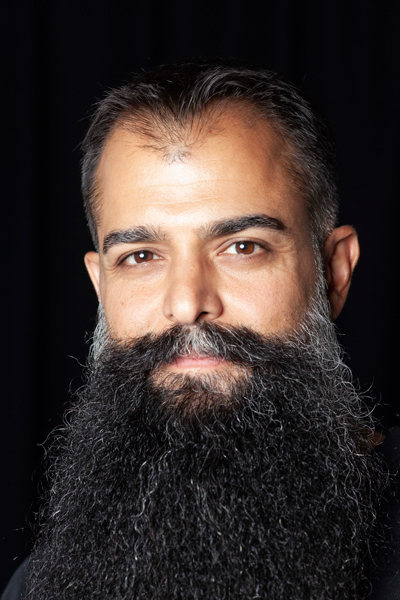
Finally, in 2023 I felt the time had come. I got myself organized internally, planned my exit, and in December I left my corporate career to devote all my energy to what I feel is my life purpose.
It’s as if, when choosing my university degree so many years ago, a fork in the timeline was created. I feel I’ve had the privilege of walking one path and now being able to return to that point of split and walk the other.
I enrolled in the Psychology degree at the UOC and I’m studying it simply for the joy of learning.
In parallel to all this, and following my heart, I decided to train professionally as an actor (I’d already spent several years enjoying and learning theater in a more relaxed, non-professional way). I began the Regular Course at Estudio Corazza.
I speak Farsi, English, and Spanish at a native level. I can also get by in Italian, and if you speak slowly in French, I’ll most likely understand much of what you’re saying, even if I won't be able to respond very well!
Oh—and I practice Ashtanga Yoga, though not very consistently, and I meditate every day.
How we’ll work together
I’ll explain what I offer and how I work
The path we’ll walk together will take us through both pleasant and difficult places. I’ll accompany you as you bring light where there hasn’t been any before—so you can see clearly what holds you back, what moves you forward, and make the decisions that best fit what you want for yourself. For that process to go smoothly, what matters most won’t be techniques, formulas, or exercises… what matters most will be the bond we create. Here’s what I offer you:

A judgment-free space
A safe place where you can show up as you are—without masks or demands. This isn’t about fitting into any ideal, but about listening to and understanding what is already alive in you.

Honesty
My only commitment is to your well-being and real progress. If I believe another kind of support would help you more at a given moment, I’ll tell you clearly and respectfully.

Listening and Proximity
I listen not only to what you say, but also to what appears between the lines, in the body, and in silences. I accompany you with a deep, close, and human presence—without haste and without distance.

Mirada integradora
I integrate tools from my entire background: coaching, Gestalt therapy, and emotional work acquired from a solid base of training and experience. I don’t work from recipes, but from criteria adapted to each person and need.

Embodied empathy
I accompany change processes not only from theory, but from the empathy that comes from lived experience—having gone through them myself and having worked them through in depth.

Conscious autonomy
I don’t push, I don’t direct, I don’t decide for you, and I don’t give advice. I accompany you so you can listen (to yourself), clarify, and choose from a place that is more conscious, connected, and truly yours.
Services
Exploratory session
An exploratory session is a first meeting to get to know each other, understand your needs, see whether the way I work can help you, and above all, see whether we have good chemistry. If it makes sense for both of us (and only then), we continue; if not, I’ll point you toward other paths.
If we haven’t worked together before, we always start here.
- Duration: 1.5 to 2 hours
- Format: online
ELI® Assessment
iPEC’s ELI® Assessment is a tool that helps us clearly understand where you are right now—without labels or boxes.
After you complete it, we’ll review the results together, which will also help us to create a shared language and lay a solid foundation for the work.
I often start coaching processes with this step.
- Duration: 1.5 hours
- Format: online
Individual sessions
Work sessions. A safe, confidential space where you can pause, listen to yourself, and look honestly at what is happening in your life.
I accompany your process with presence, deep listening, and respect for your pace—helping you gain clarity, connect with what matters to you, and find a more aligned way of being and acting in the world.
Each session is unique and adapted to you.
- Duration: 1 hour
- Format: online (in-person optional)
Frequently asked questions (FAQ)
Here are answers to some frequently asked questions and additional information about the methodologies, tools, and more…
It is a very powerful form of support, aimed at a specific topic or goal and usually limited to a specific period of time. It was born in the world of high-performance sports to help athletes reach their maximum potential when external “tasks” were no longer enough and it was necessary to achieve a result by a specific date.
That’s why it has often been transferred into the business and corporate world, since its structure greatly fits the need for achieving concrete objectives (and, let’s be honest, companies tend to have more budget for this kind of service). I believe that is part of the reason why, in the collective subconscious, whenever people hear the word “coach” or “coaching,” usually the image of a headset wearing, energetic keynote speaker is conjured. When I mention “coaching”, the comments from people are very often along the lines of: “ah, right… motivation, productivity and that sort of thing…”. And yes, many coaches do that, but I see it quite differently.
In fact, if you’re here because you need to increase your sales quota or improve your team’s productivity, I warmly invite you to look for other people who focus on that—and as always, my recommendation is that they be certified professionals with solid training backgrounds. And don't worry, there are many who fit.
Coaching can be applied to almost every area and dimension of life. Some coaches work with people with addictions, others accompany end-of-life processes, some focus on family matters, others specialize in revealing our life purpose, and so—literally—a countless list of examples.
When we talk about the differences between coaching and therapy, the first thing I think is important to mention is that we’re making generalizations. There are many ways of doing therapy and many ways of doing coaching, with very different approaches. What follows is not meant to pigeonhole or dictate, but to offer an orienting idea that will hopefully be helpful.
That said, one difference that is often useful to point out has to do with the starting point and viewpoint of each process. In general terms, therapy starts from the present and often passes through the past in order to understand it clearly, with the intention that this understanding enables change in the present. Coaching, by contrast, often starts from a functional—though improvable—present and keeps its gaze on a future of maximum potential: what the person wants to build.
This doesn’t mean that in coaching we avoid topics from the past. They show up—a lot. As in any other deep process, we encounter limiting beliefs, interpretations, projections, patterns…. The difference resides in how we work with them. In coaching we usually identify the limiting factor, look at it from different angles, and broaden awareness of what is happening, but without “going into” it as you would in a therapy session. At that point the focus turns to: what do you want to do with this? Go around it, go through it, jump over it? What matters is that you can keep moving toward what you want to achieve.
Another important difference has to do with the professional’s position. In therapy, sometimes—not always—the therapist occupies the position of expert authority and may offer interpretations or proposals. In coaching, you are the expert in your life. The coach—while being an expert in the coaching process—stands beside you to accompany and support the process and help you gain clarity, but does not give advice or propose paths. The direction of the work and the decisions always belong to you.
Gestalt therapy is one of the most widespread humanistic, person-centered therapies. The word Gestalt is often understood as figure: that which emerges and stands out against a background, like the figure of a drawing that appears over a neutral background.
Born from the work of Fritz and Laura Perls, Gestalt draws from Freud’s teachings (Fritz was his disciple), going deeper into areas not necessarily addressed by psychoanalysis, such as the body, emotions, direct experience, and the here and now.
One of its pillars is the idea of organismic self-regulation: our psycho-physical organism is naturally designed to detect and satisfy its own needs. For example, dryness appears in the mouth, we recognize it as thirst, understand we want water, go to the kitchen, drink, and feel satisfied. In this process, the need appears as a figure against the background of a neutral state.
Problems arise when we interrupt some phase of this self-regulation cycle. These interruptions are usually learned mechanisms—especially in childhood and during socialization—although they can also be related to trauma or other significant experiences. When a need cannot be satisfied, an unfinished Gestalt is created that tries to resolve itself again and again, generating discomfort and unwanted consequences. In most cases, all of this happens unconsciously.
Therapeutic work consists of getting to know oneself, bringing awareness to these processes—always from the here and now, the only place where they can be addressed—and taking responsibility for them. Responsibility understood not as blame, but as the ability to respond instead of reacting automatically.
The goal of therapy is to help the person develop greater awareness of themselves, of what happens in their inner world and in their experience in contact with the environment and others. From there, allowing the process to move forward without interruptions, those parts that have been fragmented or left unfinished are reintegrated, fostering a growing sense of coherence, wholeness, and maturity.
Gestalt therapy is also integrative in the sense that it does not focus only on the cognitive, but includes the bodily and instinctive—where all the truth of experience resides—and the emotional, approaching the person as a whole.
Core Energy Coaching, developed by iPEC, starts from a premise that differs from many coaching methodologies focused mainly on changing behavior. In this approach, it’s understood that for an action to occur, there is first an internal process that begins with the energy that drives it.
Here, energy is not necessarily understood as a spiritual concept, but as a metabolic process: the way our organism mobilizes internally based on how we perceive and interpret reality. This energy can be more constructive (anabolic) or more limiting (catabolic). Neither is better than the other; both are necessary for survival, adaptation, and growth. The “flavor” of this energy shapes our actions, which produce results that we then interpret again through the same internal filters, creating a continuous feedback loop.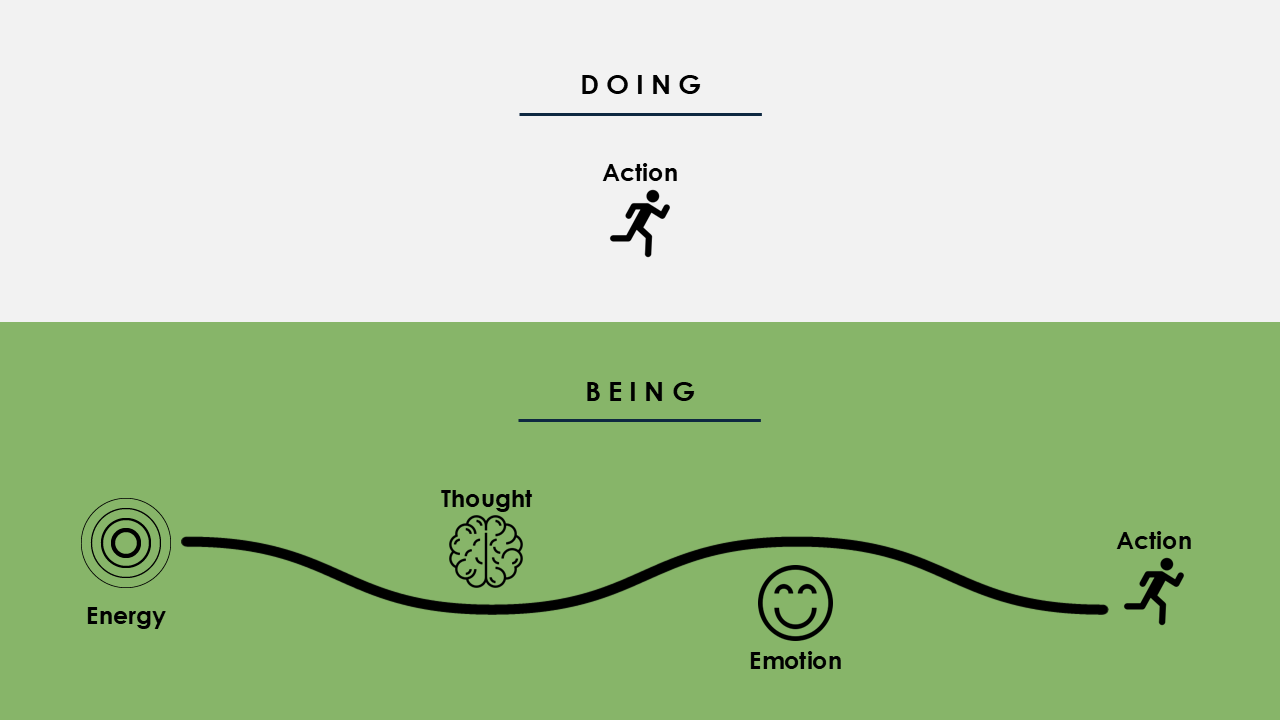
The Core Energy Coaching process focuses above all on increasing awareness of this cycle. Through the work, the person learns to identify their perceptual filters and the energy levels from which they face life’s challenges. This awareness becomes the key that allows them to choose how they want to shape their energy and act from there—to move from being at the effect of life to becoming the cause of their own lives.
I believe the first and most important thing to say about the ELI Assessment (Energy Leadership® Index), developed by iPEC, is that it is not a personality test. It doesn’t box or label a person; instead it offers a dynamic snapshot of how you are using your energy at this moment in life. It doesn’t describe who you are, but from where you are responding to what happens to you—a mirror held up to your inner world.
Precisely because of that, the ELI reflects the internal changes that occur throughout a coaching process. As a person increases awareness, identifies their filters, and learns to relate differently to life’s challenges, those changes are reflected in the assessment results. That is why I often start coaching processes with the ELI, and it can be especially interesting to repeat it periodically—every six months or a year—and at the end of the process. This helps to clearly observe the evolution.
The ELI can be taken individually or in a 360º format, also incorporating the perspective of people in your environment (family, team, collaborators…), which allows you to compare how you perceive yourself with how you are perceived.
The debrief session can be, in itself, tremendously illuminating—even if you don’t want to do a deeper process afterwards. Many people experience a significant impact with that first meeting, as they become able to put words and bring awareness to their unique mix of energies and how it influences the way they live, decide, and act.
It’s fascinating how our mind struggles to categorize and label everything that makes up our reality in order to feel safe. I’m afraid my answer to this question is not aimed at your mind.
I strongly believe that what creates real impact in a process is not any particular technique or methodology, but the bond that is created between us. It is from there—from trust, presence, and genuine humanity —that the work becomes meaningful.
My vocation is to accompany people in their processes, especially when they move through unknown spaces, moments of change, or searching. For that I use the entire arsenal at my disposal: what I’ve learned and experienced, what I continue to learn and train in, and also my intuition and creativity. Not as a rigid set of tools, but in service of what each person needs in each moment.
All with a single focus: you.
Let's Talk
You can reach me in these ways